
As we all know, most sports are inseparable from the strength of the leg muscles, whether it is running, swimming, basketball, football, leg muscles need to withstand a certain amount of pressure and load. For some professional athletes or fitness enthusiasts, the leg often needs to bear more pressure than ordinary people, so it is often necessary to use external forces to soothe the leg muscles, so that it can recover quickly and relieve tension. A massage gun is a good option.
However, not everyone can master the use of massage gun, how to use massage gun on legs? In this regard, as a professional massage gun manufacturer and veteran massage gun user, I will explain how to use massage guns to massage leg muscles in this article, to ensure that you can truly understand the correct use of massage guns, and how to effectively restore leg muscles.
Basic Principle of the Massage Gun

The massage gun works by delivering rapid vibrations and percussive force to the muscles, utilizing Percussive Therapy to help relax muscles and promote blood circulation. This principle works by deeply penetrating muscle tissue, releasing tension and breaking up muscle knots, which is particularly beneficial for post-workout recovery. It accelerates the removal of lactic acid and reduces muscle stiffness.
Specifically, the massage gun operates by having its high-speed vibration head make contact with the skin’s surface, generating continuous pulse waves that travel through the muscle and fascia layers. These pulse waves gradually loosen the tightness in the muscles, improve blood circulation, and ensure that oxygen and nutrients are delivered more effectively to damaged muscle fibers, thus promoting faster recovery.
Additionally, the massage gun comes with a variety of attachments designed to target specific areas. The large round head is ideal for large muscle groups like the thighs, while smaller heads like the U-shape, flat, and ball heads offer more precise treatment for specific body parts. These features make the massage gun a versatile tool that provides personalized care for each muscle group in the legs.
How to Use the Massage Gun Safely and Effectively

While the massage gun is an incredibly efficient tool for muscle relaxation, improper use can lead to unnecessary injuries. Here are some key guidelines to ensure you achieve the best results while minimizing the risk of harm.
Preparation: Before using the massage gun, make sure there are no open wounds, infections, or other health issues on the legs. Select the appropriate attachment for different muscle groups. For instance, the large round head is great for larger muscle groups like the thighs, while the U-shape head is excellent for targeting the neck or the sides of the spine.
Massage Techniques: Start with a lower intensity and gradually increase the speed to allow your muscles to adjust. Avoid applying excessive force over joints or areas with prominent bones to prevent injury. For legs, you can use the round head or flat head for even pressure over larger muscle groups, but be cautious around sensitive areas like the knees, ankles, and shinbones. Keep the massage duration for each area between 3 to 5 minutes to prevent over-stimulation.
Massage Order: It’s best to begin with larger muscle groups and gradually move to smaller ones. For example, start with the thighs and glutes, then progress to the hamstrings, calves, and ankles. This ensures that the body gets balanced relaxation and avoids excessive focus on one area that might lead to discomfort.
Frequency and Duration: For general muscle relaxation, 3-5 minutes per area should be sufficient, and the frequency can be adjusted depending on individual needs. Office workers who sit for extended periods or athletes who engage in intense workouts can use the massage gun 2-3 times a week, focusing on specific tense muscle groups. If you feel slight soreness after using the massage gun, it is normal. However, if the discomfort persists or worsens, it could indicate that the massage duration or intensity was too high, and you should stop immediately.
By mastering the correct usage methods, a massage gun can help speed up muscle recovery and improve the flexibility and mobility of the legs, offering valuable support for daily activities and athletic performance.
Targeted Massage Techniques for Different Leg Muscle Groups

Each muscle group in the legs has unique characteristics and requires a specific approach for effective treatment. By understanding the differences between these muscle groups, you can tailor the massage to provide the best relief. Here’s how to approach the most common muscle groups in the legs (More ways to use massage gun accessories) :

Quadriceps (Front Thighs)
The quadriceps are large, powerful muscles located at the front of the thigh. They play a key role in actions like walking, running, squatting, and jumping. After a long day of standing or an intense workout, the quads often become stiff and sore.
Recommended Attachment:
- Round Head – The round head is ideal for broad, even coverage on the quadriceps. It provides deep percussion therapy to relieve muscle tightness and stimulate circulation.
Massage Technique:
- Start at the top of the thigh near the hip and move downward toward the knee.
- Use slow, sweeping motions and avoid lingering too long over one spot.
- Apply gentle pressure at first, gradually increasing intensity to loosen the muscle.
- Target any tight spots by focusing on them for a few extra seconds.
Hamstrings (Back of Thighs)
The hamstrings are the muscles located at the back of the thigh. They are often prone to tension, especially in athletes who run or perform high-intensity workouts. Tight hamstrings can lead to stiffness and increased risk of injury.
Recommended Attachment:
- Ball Head – The ball head is perfect for the hamstrings as it allows for precise, deeper pressure while covering a larger area. It is especially helpful for breaking up muscle knots.
Massage Technique:
- Begin at the top of the hamstrings and work your way down to the knee.
- Use circular motions to target deeper muscle layers.
- Avoid using too much pressure on the sensitive area near the knee joint.
- Focus on areas where you feel tightness, and hold for a few seconds to release the tension.

Calves (Lower Legs)
The calves, consisting of the gastrocnemius and soleus muscles, are crucial for walking, running, and jumping. Due to their frequent engagement, they are often one of the first muscles to experience soreness, especially after high-impact activities.
Recommended Attachment:
- Round Head or Spade Head – The round head can provide gentle coverage for the calves, while the spade head can focus on more targeted, deeper relaxation.
Massage Technique:
- Start at the lower part of the calf and gradually move upward.
- Apply slow, steady pressure, especially around the Achilles tendon area.
- For deeper relief, you can use a spade head, but always start at lower intensities to avoid over-stimulation.
- Focus on areas where knots or tension are most noticeable.
Glutes (Buttocks)
The gluteal muscles support posture and movement, and when tight, they can cause discomfort in the lower back and hips. A deep massage can relieve tension in the glutes, especially after sitting for extended periods or engaging in intense physical activity.
Recommended Attachment:
- Spade Head – The spade head is designed to target larger muscle groups like the glutes, providing deep pressure to enhance flexibility and mobility.
Massage Technique:
- Focus on the upper and outer areas of the glutes, which often carry the most tension.
- Use circular motions to gently work through tight spots.
- Be mindful of the hip area, as the hip flexors can be sensitive. Use light pressure when massaging close to the pelvis.

Shins (Front of Lower Legs)
The muscles on the front of the lower legs, specifically the tibialis anterior, can experience tightness, especially from running or activities involving excessive foot flexion. Shin splints, a common condition, often stem from this tightness.
Recommended Attachment:
- Flat Head – The flat head provides gentle, even pressure, making it ideal for the shins.
Massage Technique:
- Move slowly from the top of the shin (near the knee) down to the ankle.
- Apply light pressure to avoid irritation, and focus on areas where tightness is most prevalent.
- Use long, sweeping motions to promote blood flow and reduce stiffness.
Comparison of Treatment Methods for Different Leg Muscle Groups
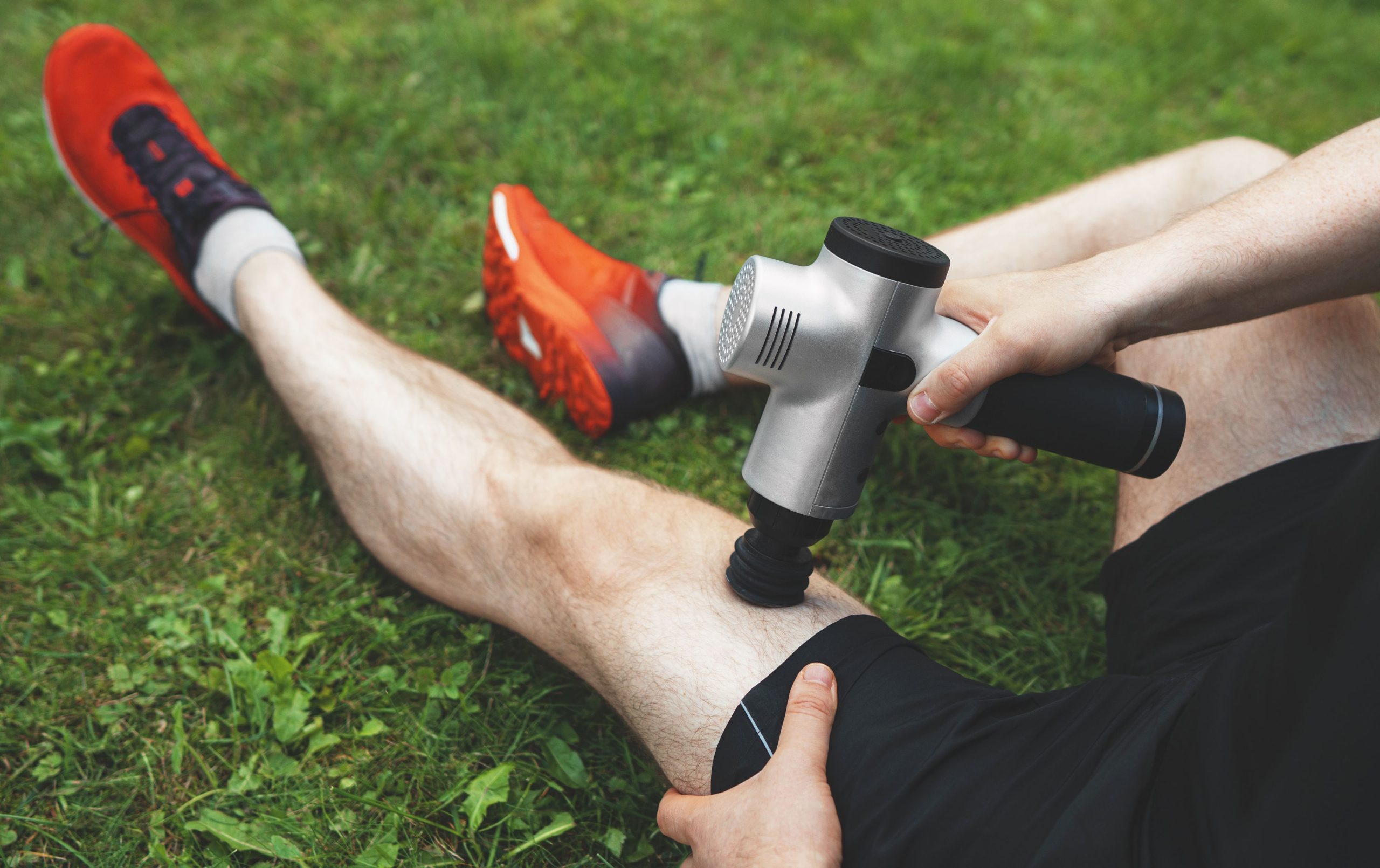

While all leg muscles require massage, each group has specific needs that should be addressed differently. Below is a comparison of the most effective treatment methods for the quadriceps, hamstrings, calves, glutes, and shins:
Quadriceps vs. Hamstrings
- Quadriceps are larger, surface-level muscles that benefit from broad, even strokes with a deep but gentle percussion. The round head works well here, ensuring thorough coverage and deep muscle relaxation.
- Hamstrings, on the other hand, are deeper and can be more sensitive. They respond best to the ball head, which provides concentrated pressure to break up knots without overstimulating the muscle. The use of circular motions with a slower pace also ensures deeper muscle penetration.
Calves vs. Glutes
- Calves tend to require a more gradual approach since they can be prone to soreness due to their frequent engagement in activities like running and jumping. The round head is ideal for a broader, gentler massage, while the spade head can target deeper, more localized tension.
- Glutes, being larger muscle groups, respond better to a spade head. The focus should be on deep relaxation and flexibility, particularly at the upper and outer parts of the glutes, which carry the most tension.
Shins vs. Other Muscle Groups
- Shins are generally more sensitive, requiring a gentler approach with light pressure. The flat head is perfect for this purpose, as it spreads pressure evenly and helps release tightness without irritation.
- In contrast, muscles like the quads, hamstrings, and glutes can tolerate more intense pressure, particularly when using attachments like the spade or round head. These larger muscles respond well to deeper percussion therapy, making them less prone to discomfort during massage.
General Observations
- Larger Muscle Groups (Quads, Hamstrings, Glutes): These muscles benefit from deeper pressure and more extensive coverage. They respond best to the round head, spade head, and sometimes the ball head for targeted relief.
- Smaller or More Sensitive Muscle Groups (Calves, Shins): These muscles are more responsive to lighter pressure and more controlled movements. Flat heads or ball heads are preferred to avoid overstimulation, particularly for areas like the shin and calf muscles.
By understanding how each muscle group responds to different techniques and attachments, you can tailor your massage sessions to maximize effectiveness and ensure that your legs recover quickly and efficiently. Whether you’re looking to reduce soreness, prevent injury, or improve flexibility, using the right attachment and approach for each muscle group is key to achieving the best results.
Precautions and Common Misconceptions


While the massage gun offers significant muscle relaxation and recovery benefits, it’s crucial to use it correctly to avoid any adverse effects. Here are some key precautions and common misconceptions to keep in mind:
Avoid Over-massaging
One of the most common mistakes with massage guns is overusing them. Although a massage gun can provide deep muscle relaxation, excessive time or pressure can damage muscles and soft tissues. This is particularly true in sensitive areas like joints, neck, and spine, where overuse could lead to muscle strains or nerve damage.
Recommendations:
- Limit each massage session to 3–5 minutes per large muscle group.
- For smaller muscles (e.g., calves or shoulders), reduce the time further to prevent over-stimulating these areas.
- Avoid using high pressure in sensitive areas like the spine and neck, opting for lower intensity or appropriate attachments (e.g., U-shape, round head).
Choose the Right Attachment
Different attachments are designed for different purposes, and using the wrong one can affect your massage experience and might even cause discomfort. For example, using a round head attachment for deep massage on the calves may be too intense and could lead to muscle tightening instead of relaxation.
Recommendations:
- For larger muscle groups like the glutes and thighs, use the round or spade head to apply moderate pressure.
- For smaller muscles or sensitive areas (e.g., neck, wrists), choose the U-shape, T-shape, or flat head to avoid over-stimulation.
- Select attachments based on your individual muscle needs and massage goals, rather than just opting for the deepest possible massage.
Maintain Correct Posture
Correct posture and technique are crucial to ensure that the massage gun works effectively. If your posture is wrong, it can lead to muscle tension rather than relaxation, even while using the device.
Recommendations:
- Keep your body relaxed during the massage and avoid forcing the device onto tight areas.
- Don’t apply the massage gun directly on bones or joints, especially along the spine and areas where bones protrude.
- Try to relax the muscles you’re targeting, as stiff muscles may increase discomfort during the massage.
Common Misconceptions
- “The harder the massage, the better”: Many people believe that applying maximum pressure leads to better results. In reality, too much force can overstretch muscles and cause injuries. The goal is to feel relaxed, not in pain.
- “It can be used anywhere on the body”: While the massage gun is designed to cover most body parts, it’s not advisable to use it anywhere indiscriminately. Sensitive areas like the neck, joints, and spine should be treated with extra care.
- “It needs to be used for long periods every day”: While the frequency of use can vary depending on your needs, excessive use can actually have the opposite effect, making muscles fatigued and reducing recovery. Proper recovery includes rest, not just constant stimulation.
Conclusion and Recommendations


In conclusion, the massage gun can be an excellent tool for relieving muscle tension, improving flexibility, and accelerating recovery, particularly for leg muscles after intense physical activity or long periods of sitting. However, the effectiveness of this tool largely depends on how it’s used.
Summary
- Effectiveness of the Massage Gun: The massage gun is highly effective for relieving muscle tension, improving flexibility, and speeding up recovery, especially in the legs. It’s ideal after workouts or long sitting sessions.
- Targeted Usage: Different leg muscle groups (such as quadriceps, hamstrings, calves) require different approaches. Using the correct attachment and intensity for each muscle group ensures better results.
- Precautions: Avoid overuse, select the appropriate attachment, and maintain proper posture to achieve the best results and prevent injury.
Recommendations
- Go at Your Own Pace: Adjust the intensity and duration of the massage gun based on your body’s condition. If your muscles are particularly sore or tight, reduce the intensity to avoid over-stressing them.
- Use Regularly, But Don’t Overdo It: Limit massage sessions to 10–15 minutes a day, with each muscle group receiving no more than 3–5 minutes of attention. Give muscles enough time to recover between sessions.
- Evaluate Regularly: Assess how your body responds to the massage gun over time. If you experience persistent discomfort or new pain, stop using the device and consult a healthcare professional.
- Complement with Other Recovery Methods: Massage guns should be used in conjunction with other recovery practices, such as stretching, proper nutrition, and adequate rest, for best results.
By mastering the right techniques and precautions, a massage gun can become an essential part of your recovery routine, helping to release tension, improve flexibility, and enhance overall well-being. Use it wisely to target your leg muscles, relieve post-exercise fatigue, and elevate your body’s comfort level for optimal recovery.
Looking for a quality massager manufacturer

Centurylux is a professional manufacturer and developer of massagers, with our own production Factory. Our product range includes massage guns, massage chairs, and other body massagers, providing a one-stop solution for all your massager procurement needs. If you’re looking for a high-quality massager manufacturer, Centurylux would be an excellent choice. Below are some of our recommended massagers for professional leg massage:
1. Massage Gun TM02

This TM02 Massage Gun is a percussion massager gun that uses pulsed pressure to penetrate deep into your muscle tissue. Deep tissue massage relieves muscle stiffness and soreness and improves blood circulation. When you feel sore, tired or want to relax, the deep tissue massage gun gives you an instant massage. Fasciitis can also be prevented by using a massage gun for cellulite.
2. Knee Massager KM03

Our best-selling KM03 Knee Massager with Heat is specifically designed for knee massage. It features three constant-temperature massage modes, effectively relaxing muscles and improving blood circulation. It is an essential massage tool for fitness enthusiasts and home use.
3. Leg Massager LM03

LM03 Air Compression Massager is specifically designed for massaging the thighs and calves. It features three massage modes, including air compression and heat therapy, effectively relaxing muscles and improving blood circulation. It is an essential massage tool for both fitness enthusiasts and home use.
4. Foot Massager FT02

Shiatsu Foot Massager Machine with Heat, Deep Kneading Massager, Delivers Relief for Tired Muscles and Plantar, Multi-Level Settings & Adjustable Intensity for Home or Office Use

Leave A Comment